TraMod TALKS with Waleed Arafa
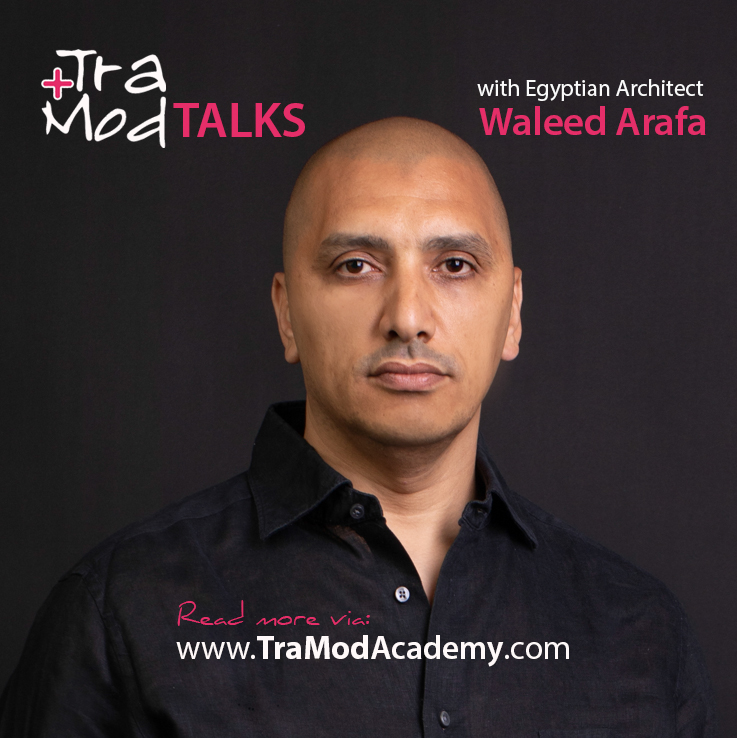
Read Javad Eiraji`s Exclusive Talk with the Egyptian Architect and Founder of Dar Arafa Architecture, Waleed Arafa
Waleed Arafa is an Egyptian architect, founder and principal of Dar Arafa Architecture, Cairo, Egypt. He holds a B.Sc. in Architecture, Ain Shams University, Egypt, 2001, a degree in the Conservation of Historical Buildings, from the Architectural Association School of Architecture in London, UK, 2015. His thesis was titled: “The Mosque in Britain: British Heritage?”. He is currently completing his MA thesis in the History of Islamic Art & Architecture, at the American University in Cairo, with a working title: “Re-interpreting Tradition: In Search of a Future of Architecture”. Waleed has also proudly done free Islamic studies with many prominent Islamic scholars, especially in the oldest Islamic institution Al-Azhar Al-Sharif. He has had the privilege of having had met and conversed with many prominent religious figures from other faiths, such as Pope Francis. In addition to Waleed’s research-based, award-winning design and hands-on construction experiences, he has lectured, spoken and lead workshops in many universities and institutions around the world. Waleed’s first solo project; Dar Arafa Residence, earned a nomination for the Aga Khan Award 2010 & the Hassan Fathy Award 2009. Years after, the Basuna Mosque, was celebrated internationally with awards including: Abdullatif AlFozan Award for Mosque Architecture 2020, Saudi Arabia, a nomination for the Aga Khan Award 2022, the World Architecture Festival Completed Buildings WAF 2020/2021, Portugal, Archmarathon Stone Award 2019, Italy, Construction21 Green Solutions Award 2019, France and the International Building Beauty Award, set by the British Royal Commission of Fine Arts in its first cycle 2022. ‘La Maison d’Égypte’ 2020-2023, is Waleed’s international constructed debut, located in the Cite International Universitaire in Paris, France, across a football field from two Le Corbusier buildings. He has been commissioned a number of heritage-related mosque projects in Bahrain and has been preselected for a number of closed international architectural competitions relating to sacred architecture of all faiths in both Russia and Saudi Arabia. Waleed Arafa was listed in the Architectural Digest Middle East 50 Power List, UAE, shortlisted for the Mohammed Makkyiah Tamayouz Award: Middle Eastern Architecture Personality of the year 2019, Jordan and the Entrepreneurial Alumni Awards 2020, British Council. He is currently working on a regeneration project in Historical Cairo, a social and sporting club west of Cairo and a grand Islamic cultural and community center, near the New Administrative Capital of Egypt using earth construction techniques. Education is key to Waleed’s practice and as a result, he continues to lecture and speak at numerous local and international universities and professional forums. Waleed’s scholarly research, as well as his design & build hands-on practice, all aim at understanding the essence of Sacred Architecture, in general and the architecture of Islam in particular. His approach is based on finding ways to continuing the discontinued architectural past of countries with an established legacy in the architecture of Islam, such as & especially Egypt. However, he is equally, looking into how to bring forth renewed architecture(s) of Islam in completely new contexts such as Great Britain and the Occident at large, through which a more spiritual, holistic, egalitarian and sustainable global architecture could emerge in service of humanity as a whole
Javad Eiraji: What is the meaning of tradition, culture and identity and how can they have effect on the world of design
Waleed Arafa: Tradition must be understood as a paradigm, a syntagma, a methodology and process, not as a final product or circumstantial solution. This means that we cannot consider a particular tangible architectural product traditional in and of itself, just because it was used successfully in the past; a dome, a mashrabiyya or the use of Arabic inscriptions. The criteria for evaluating how traditional something is, should be based on whether a given tangible architectural element or thought is in harmony with the same immutable principles essential to these previous tangible traditional elements, even if the elements under evaluation are complete innovations, unseen and unheard of in the annals of the history of “traditional” architecture. Tradition at any given moment is composed of two main components: the absolute immutable and the relative mutable. The latter must be logically accurate deductions of the former. Tradition in its true sense, capable of offering us a continuous future of architecture, must always be able to discern between these two components. The discernment is essential so that the right type of effort could be applied to each one of them. The effort applied to the absolute immutable should not be towards replacing it, rather further understanding it, closing the gap between its higher reality and our own relative understanding of it. Whereas the effort that should be applied to the relative mutable is in identifying the differences between diverse applications of the immutable principles within the ever-changing mutable relative moments of time and space. For example, safety is an absolute immutable principle with regards to the question of shelter, be it ancient or contemporary and at any given location or space. It transcends time and space in and of itself. However, the means by which this absolute immutable principle is achieved, is in itself relative and mutable. Traditional architecture in this sense, is a gateway to happiness in this world and salvation in the next. This is done with an incredible balance between the requirements and necessities of both worlds. The interest in the hereafter does not override the interest in the present place and moment, for they are linked to one another in harmony. For tradition views dualities in the light of complementarity. Female and male, young and old, poor and rich, they complement one another and help one another to understand their very existence. This is unlike the Modern and Postmodern views that perceive differences in a conflicting manner, the former on a quest to eradicate one difference in favor of another, while the latter attempts to balance the scale by frantically creating unreal differences and demanding that they would be respected. The necessity and impact of tradition, as previously defined, is that it offers architectural theory and practice a categorically different point of departure. It expands the sources of knowledge beyond the limitedness of the Baconian method’s experience of the sensory powers, to include Reason and Metaphysics. Furthermore, it transcends, not just resolves, the clash between these three sources, for the tradition of Islam postulates that all three are but mere manifestations emanating from one source; God
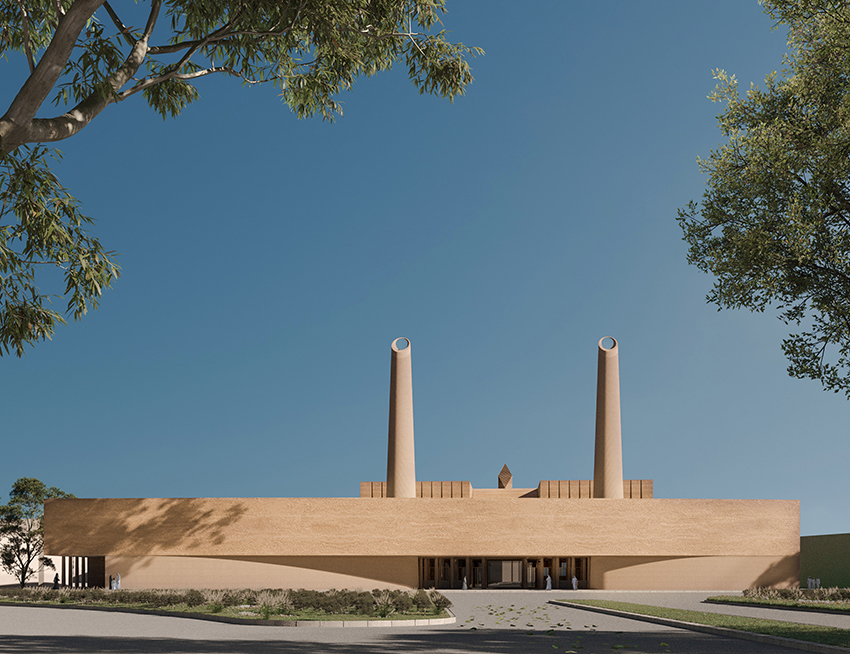
Javad Eiraji: How do you see the conditions of contemporary architecture of the world? Where is it going on
Waleed Arafa: Architectural theory and practice today owes its different strands and positions to Enlightenment. The Encyclopedia Britannica defines Enlightenment as follows: “A European intellectual movement of the 17th and 18th centuries in which ideas concerning God, reason, nature, and humanity were synthesized into a world-view that gained wide assent in the West and that instigated revolutionary developments in art, philosophy, and politics. Central to Enlightenment thought were the use and celebration of reason, the power by which humans understand the universe and improve their own condition. The goals of rational humanity were considered to be knowledge, freedom, and happiness.” It is important to emphasize the strictly European context in which these theories emerged and thrived. Even theories that emerged geographically outside of Europe, came to exist within the bounds of Western hegemony, be it in further propagating it or in being a reaction to it. These strands, may differ and oppose one another, however, they all share the following convictions: 1. The denial of metaphysics as a source of knowledge; God is dead! 2. The reduction of human existence and experience to only the physical and psychological, in a complete denial of the spiritual dimension. 3. The inevitability of dichotomy and constant clash. Function follows Form? Form Follows Function? Less is more? Less is bore? Absolute universalism versus absolute relativism. Prescriptive versus descriptive. Absolute Reason versus Absolute myth. 4. The myth of linear progress. Any chronically advanced point on the time-line holds more value and credibility than the points preceding it. The past is by definition darker and holds no promise. This worldview is responsible for the fact that architecture today, in its hyper-commodified state, is one of the main contributors to our catastrophic environmental crises that is threatening the very survival of our planet
Javad Eiraji: Is it needed to look and use past in today? Can traditions be used in today`s architecture
Waleed Arafa: The Past and its cumulative experiences; Tradition being the product of the Past was/is how we arrived/arrive/will continue to arrive at the Present, through maintaining chains of transmission of the positive experiences, and learning from the mistakes on the one hand, or through an unintentional severance and perhaps our intentional and deliberate breaking away from it. Understanding the Present, its predicaments, potentials, and its most pressing priorities is the first step in any sensible march towards a better Future. It is also essential that we understand the Past and the cumulative epistemology it presents us with, in absolute, and in comparison, to the Present, as a gateway to Future. This could be achieved both through reviving the chains of transmission and design methodologies credited with positive architectural outcomes, as well as through avoiding the methodologies and applications that have proven negative and destructive on both the local and international levels
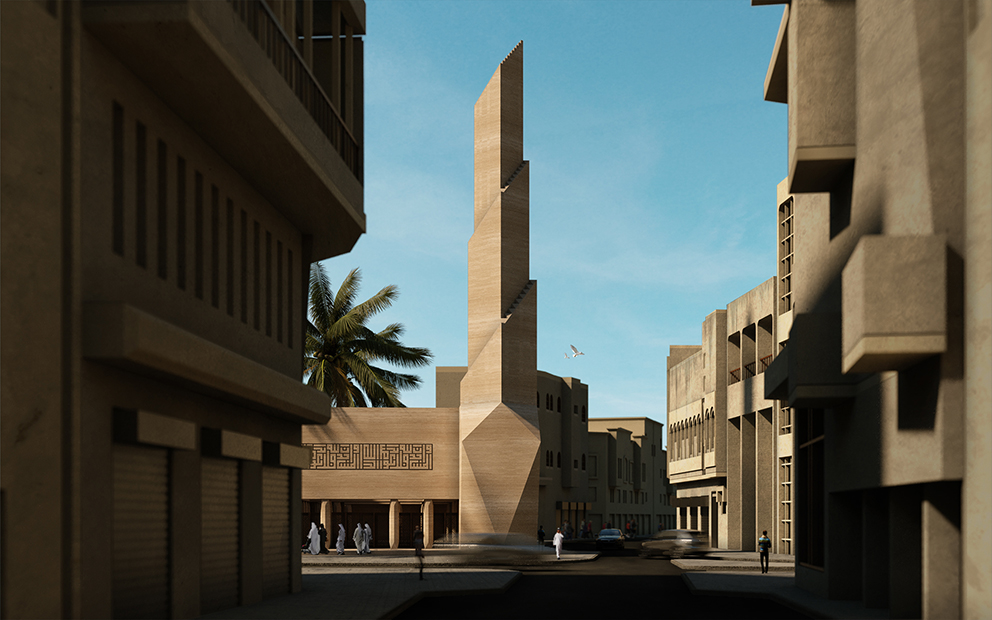
Javad Eiraji: How can tradition have interactions with modernity? How can it happened in architecture
Waleed Arafa: Modernity is a worldview in and of itself. I think maybe you mean how tradition can interact with our contemporary times. In my opinion, there three approaches to this question: The first is what I call conscious imitation, whereby the use of past traditional elements, materials and techniques, is encouraged, if and only if they maintain their validity as objective optimum solutions in a particular scenario. This can only happen if the whole matrix responsible for producing a certain element, at a given moment in time and space, recurs. The second is Re-imaging past solutions in expansive and unprecedented ways. The third is understanding Tradition as Methodology, and not as a final product. This entails the identification of an immutable general equation that represent the unchangeable principles of a given tradition, that are then fed with contemporary values, dependent on time, space, users and temporal conditions, resulting in fresh solutions that are efficiently adequate for the contemporary world without negating or contradicting tradition, rather expanding it